One of the easiest ways to check the health of your own furnace is to do a temperature rise check. You don’t need to be a “handy” homeowner to do this test, and you don’t need any special equipment; just a meat thermometer.
We’re borrowing a blog post from our friends at Structure Tech Home Inspections, based in Minnesota.
The job of a forced-air furnace is to take relatively cool household air, pass it over some hot metal, and blow that heated air to the rest of the house to distribute the heat. If everything is working properly, the air coming out of your furnace will be about 40° – 70° warmer than the air coming in; this increase is called the temp rise. If the temp rise is too high, this might be due to an oversized furnace, undersized ductwork, a combustion problem, or an airflow obstruction. Airflow obstructions can be caused by a dirty furnace filter, a dirty air conditioner coil, a dirty secondary heat exchanger, or blocked supply or return registers.
All of these things lead to a furnace running hotter than it’s supposed to run, which can lead to a home being less comfortable, less efficient operation, short-cycling, and a reduced life for your furnace. You don’t want any of those things.
How to do a temp rise check
With the thermostat set to ‘heat’, turn up the temperature at your thermostat ten degrees warmer than the current temperature. This should get your furnace to kick on. Now, wait about fifteen minutes.
During this time the furnace should run continuously without shutting off. Grab a book and camp out next to your furnace to babysit this process. If the furnace shuts off prematurely, go check the thermostat. If the thermostat has already been satisfied, it is likely due to an oversized system, or the thermostat might be located in a poor location, like right in front of a heat register. It’s not normal for a furnace to raise the indoor temperature ten degrees in less than fifteen minutes. If the furnace shuts off before satisfying the thermostat, it’s short-cycling, which indicates a problem.
After the furnace has been running for about fifteen minutes, put your hand on the ductwork above the furnace. If everything is operating normally, the ductwork will be hot, but not uncomfortably hot. You should be able to leave your hand on the ductwork without feeling any pain.
But to really do this test correctly, get a meat thermometer and stick it into the ductwork above the furnace. If your furnace installer was especially diligent about sealing everything up, it might be tough to find somewhere to put your probe. But you can almost always find a small hole somewhere.
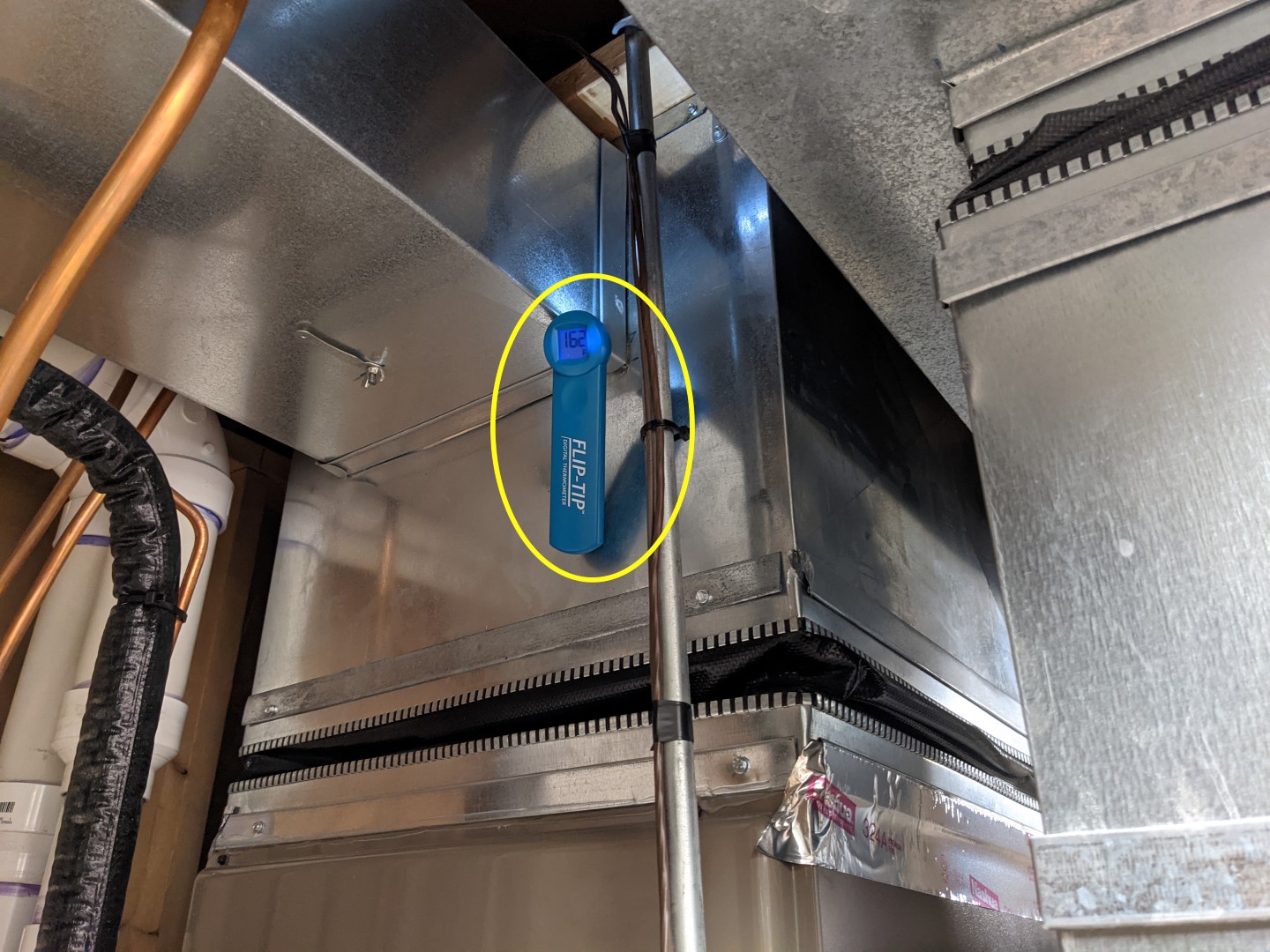
Next, check the temperature of the return air as well. I always do this at the furnace filter door.
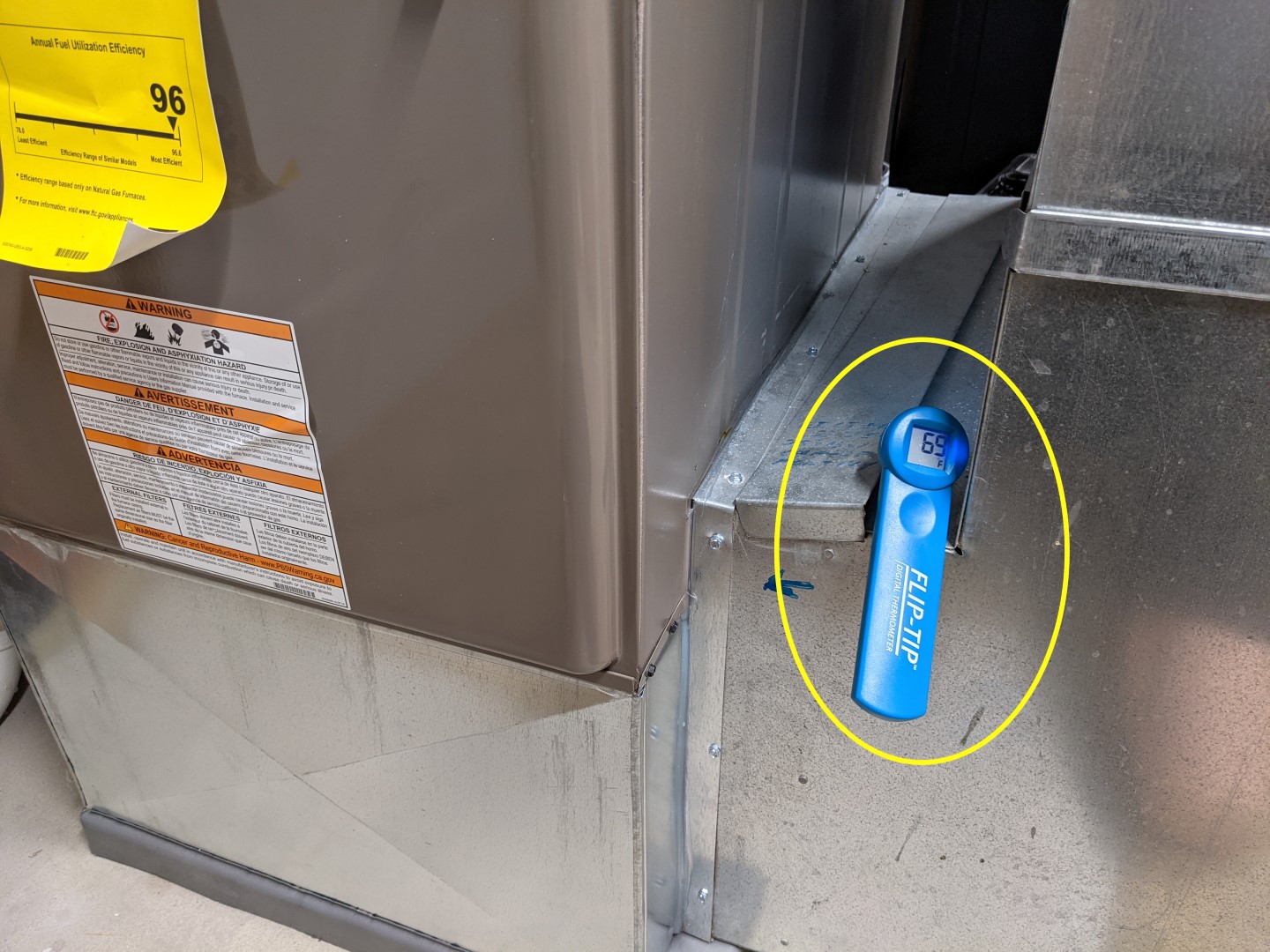
The difference between these two numbers is what HVAC contractors and geeky home inspectors call “Delta T” (written “ΔT”), as in “temperature difference”. This is also called the temp rise. Temperature Rise Check: To determine if your furnace has an acceptable temperature rise, just take a look at the specs on the furnace. Every furnace should have a label with some basic info about the unit, such as the model number, serial number, BTUs, and temperature rise.
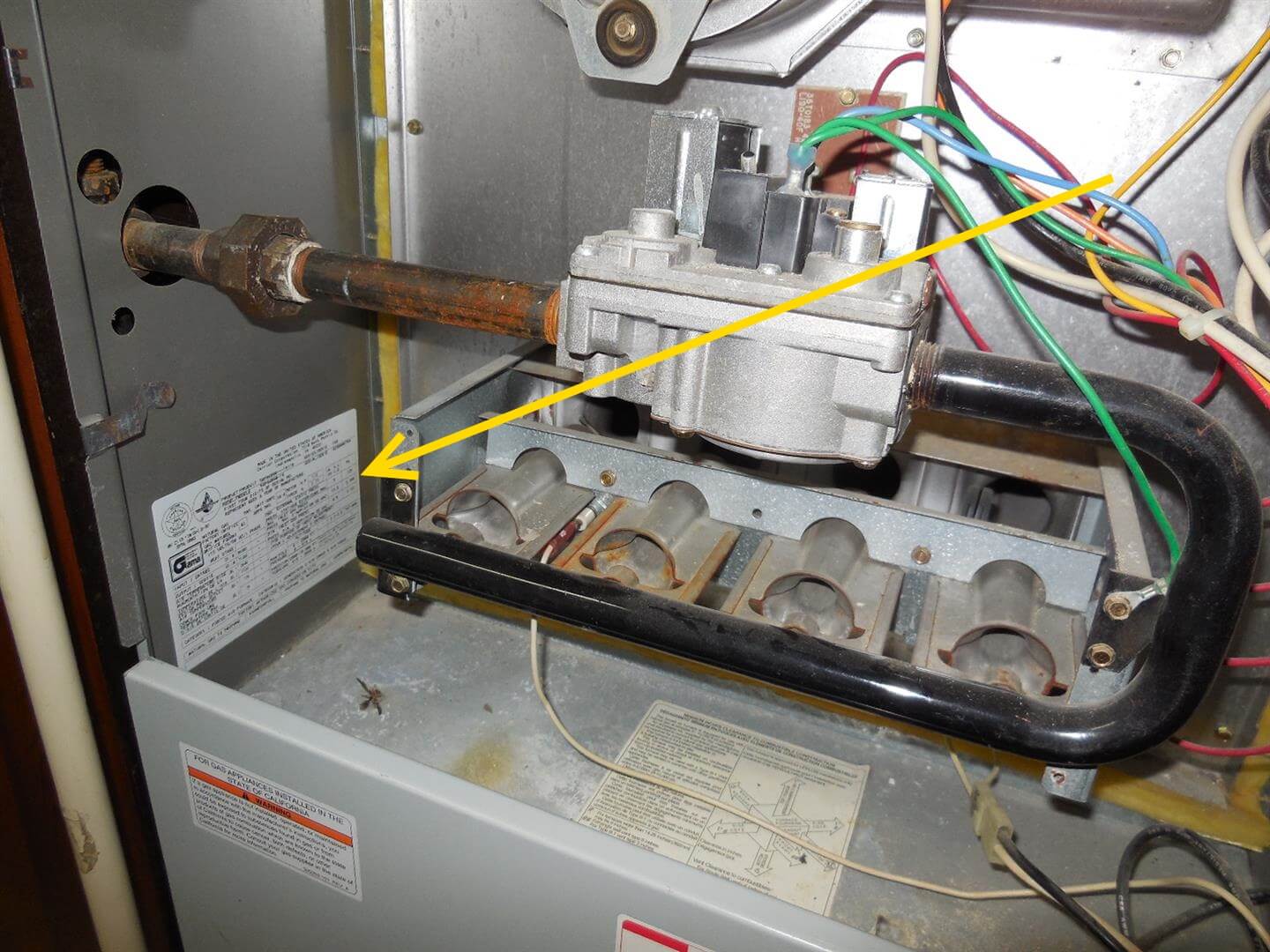
You might need to hunt around for this label; sometimes it’ll be inside the burner compartment, as shown above, it could also be attached to the door on the blower compartment.

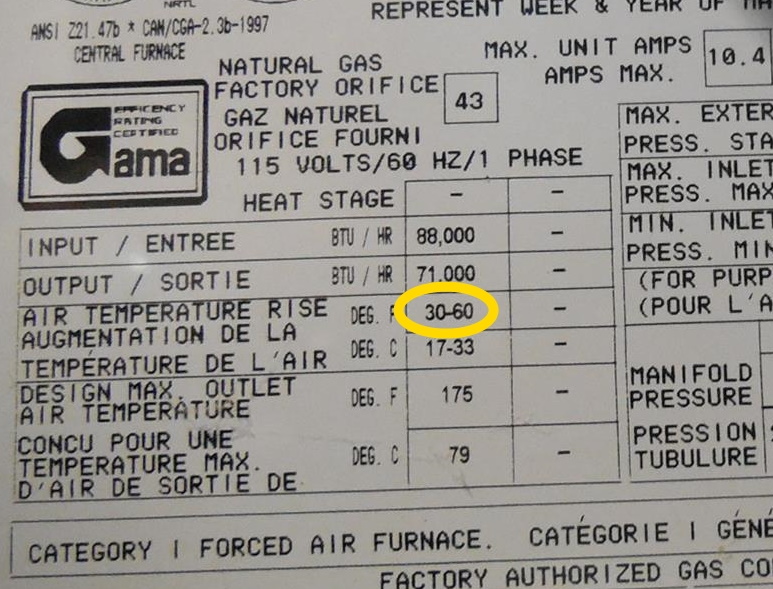
The temperature rise will give a range; for example, the label pictured below says the temperature rise should be between 30 and 60 degrees. If the temperature rise is above 60 degrees, you have a problem.
If there’s an excessive temperature rise, the first thing to check is the filter; a dirty furnace filter will obviously restrict airflow, making the temperature rise higher. If the filter is clean, go around the house and make sure the supply and return registers are open; closed registers = less airflow = higher temperature rise.
If it’s neither of those things, you probably have a problem with your system. That’s when it’s time to call a good HVAC contractor out for the annual furnace inspection you’ve been putting off for the past several years.